Sustainability Without Compromising Quality: A Mass-Balance Approach
Sigma’s Decision: 40% Bio-Based Content Without Mold Changes
Yoshiaki Saka
Section Chief, Product Development Division , Sigma Corporation
The Solution: Adopting Biomass-Based Resin Through the Mass Balance Approach—Without Changing Existing Molds
Summary of the Solution
- Bio-based polycarbonate offers material properties comparable to conventional grades, enabling Sigma to continue using existing molds and achieve a smooth transition.
- The mass balance approach—verified under ISCC PLUS—assigns environmental attributes to the product, helping embed sustainability value without changing performance.
- By switching a core material—glass-fiber-reinforced polycarbonate used at high volume—Sigma achieved a significant environmental impact.

Solution and Product Overview
Introducing the Solution

To address these challenges, Teijin proposed bio-based polycarbonate resin produced via the mass balance approach.
In this approach, biomass-derived and fossil-derived feedstocks are mixed during processing and distribution, and environmental attributes are allocated to the final product in proportion to the amount of biomass feedstock used (in accordance with ISCC PLUS certification).
A key advantage is that the final material’s physical and chemical properties remain equivalent to conventional fossil-based polycarbonate.
“At first, I found the concept of mass balance difficult to grasp, but once I understood the logic, it felt extremely rational,” says Mr. Saka.
“If the chemistry of the raw material is the same, it’s like cooking: the taste doesn’t change depending on which sugar or salt you use. In the same way, the resin’s material properties don’t change.
That means we don’t need to change the molds. We can shift to a more sustainable option immediately—without sacrificing precision—and if biomass feedstock becomes unavailable, we can switch back to the conventional material. That flexibility was the decisive factor for us as developers.”
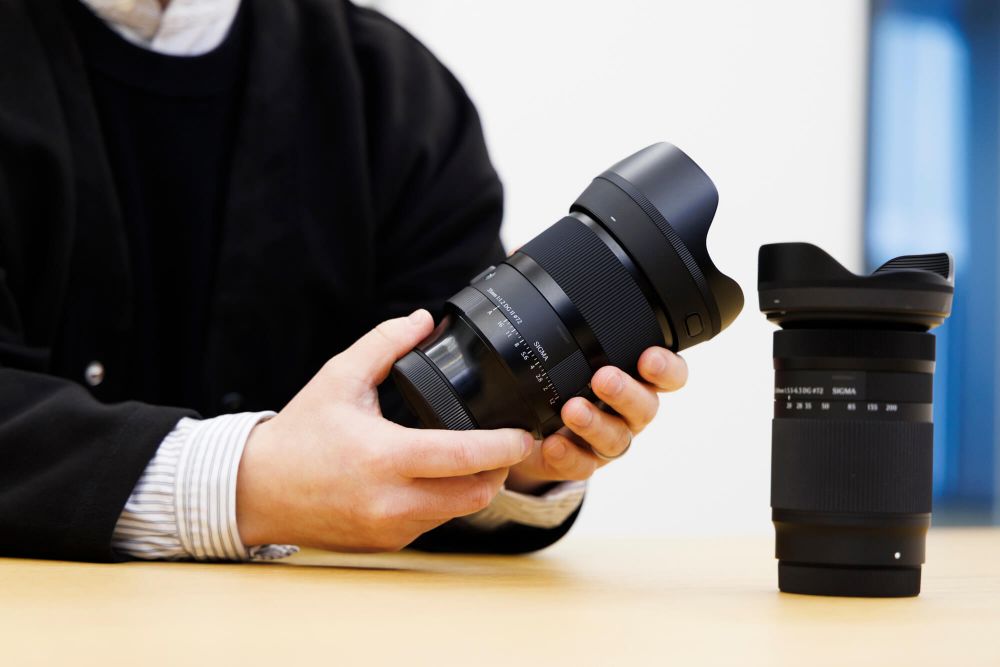
Sigma adopted a glass-fiber-reinforced polycarbonate grade—known for excellent dimensional stability and stiffness—enhanced with biomass attributes through the mass balance approach.
For components such as lens barrels that support the optical system, low material anisotropy (direction-dependent shrinkage during molding) is critical; it is essential to maintaining optical-axis precision.
“We had long trusted Teijin’s materials because they offer low anisotropy and stable, consistent quality,” says Mr. Saka.
“At the time, Teijin was the only supplier that could meet our high precision requirements while also offering a mass balance option to introduce bio-based content. The combination of technical credibility and a compelling sustainability proposal made a real difference.”
This decision delivered a substantial environmental impact.
By deliberately targeting one of the most-used core materials in its products, Sigma succeeded in converting approximately 40% of its plastic components to bio-based content in a single move.
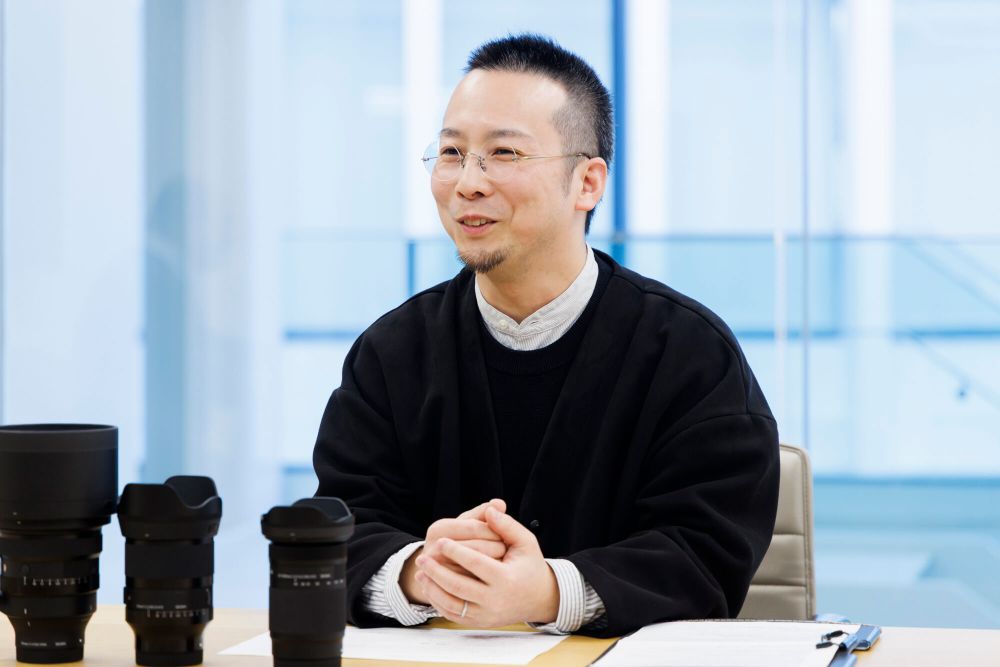
Sigma adopted a glass-fiber-reinforced polycarbonate grade—known for excellent dimensional stability and stiffness—enhanced with biomass attributes through the mass balance approach.
For components such as lens barrels that support the optical system, low material anisotropy (direction-dependent shrinkage during molding) is critical; it is essential to maintaining optical-axis precision.
“We had long trusted Teijin’s materials because they offer low anisotropy and stable, consistent quality,” says Mr. Saka.
“At the time, Teijin was the only supplier that could meet our high precision requirements while also offering a mass balance option to introduce bio-based content. The combination of technical credibility and a compelling sustainability proposal made a real difference.”
This decision delivered a substantial environmental impact.
By deliberately targeting one of the most-used core materials in its products, Sigma succeeded in converting approximately 40% of its plastic components to bio-based content in a single move.
Profile
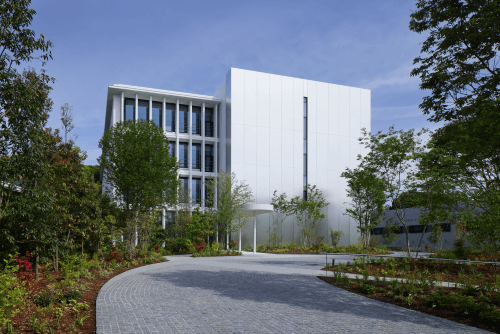
Founded in 1961, Sigma Corporation is an optical equipment manufacturer that develops, produces, and sells digital cameras, interchangeable lenses, and cinema lenses. The company is committed to its integrated production system at its Aizu facility in Fukushima, Japan—“Made in Aizu, Japan”—with in-house capabilities spanning design, manufacturing, and mold-making. Sigma operates in more than 85 countries and is widely supported by professionals and enthusiasts worldwide.
Yoshiaki Saka
Section Chief, Product Development Division , Sigma Corporation
Mr. Saka joined Sigma in 2007 and has since been responsible for mechanical design for interchangeable lenses. He has worked on many of Sigma’s flagship products, including the Sigma 24–70mm F2.8 DG DN | Art and the Sigma 150–600mm F5–6.3 DG OS HSM | Contemporary. As a section chief, he manages the mechanical design team and serves as the technical and quality lead across development projects.